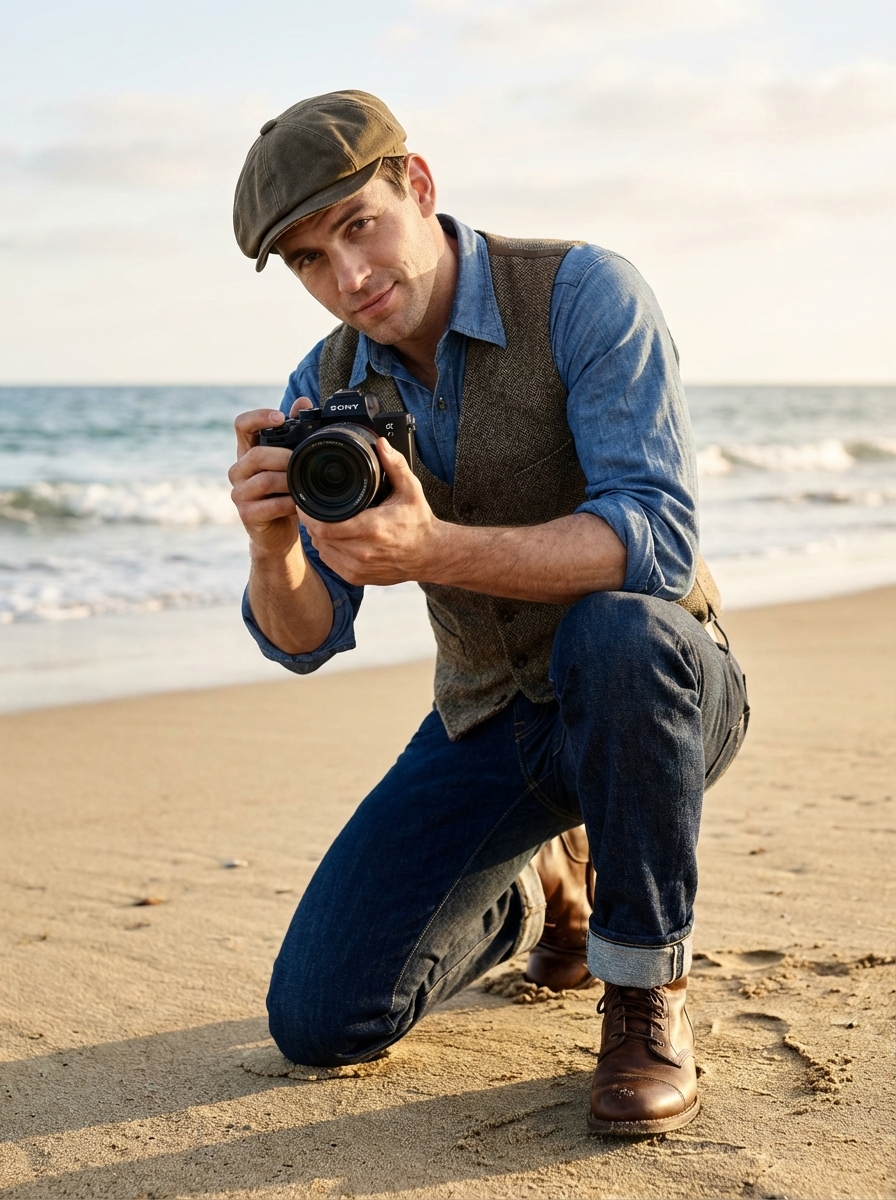
28 years old
Gerard was born in Marseille to an Algerian father and a French mother, both engineers. He took apart his first engine at nine. By the time he was sixteen, he'd built a remote-operated underwater drone from salvaged parts and filmed the hull of a sunken fishing trawler off the Calanques. The footage made the local news. Gerard didn't care about the attention — he cared that the camera housing held at depth.
Dark-haired, restless, always leaning forward as if the conversation can't move fast enough. He talks with his hands. He interrupts. He's the first person to spot a flaw in a plan and the last person to let it go. People either love working with him or find him exhausting. There's no middle ground.
He studied mechanical engineering at ETH Zurich, then spent two years at a submersible manufacturer in Bergen, Norway, redesigning pressure hull systems. His innovations in titanium sphere construction reduced failure risk at extreme depth by a factor of three. He was twenty-five. The industry noticed.
Sam recruited Gerard not for what he knows, but for how he thinks — fast, laterally, and without fear. Gerard is the expedition's systems engineer. He maintains the submersible, monitors every seal, every valve, every readout. If something breaks eleven thousand metres below the surface, Gerard is the reason they survive it.
He doesn't sleep much. He paces the house at night, checking schematics on his phone, running numbers that no one asked him to run. He believes the dive will go well because he's made sure of it. But there's a part of him — the part that took apart engines as a child — that secretly hopes something goes wrong. Not dangerously wrong. Just wrong enough to be interesting.